Tuesday, December 3, 2013

Living in Chloe's City


There are these words to describe a functioning city, now. They're not new, exactly, although their usage mostly is, or is at least new enough to sound strange. These are George Saunders-style buzzwords, half military-grade technical and half willfully opaque MBA jargon—Vibrant and Sustainable (in its non-ecological application) and Creative (as a noun) and Scalable and so on—that have taken on a weird and unearned status as terms of art when used to describe a city being a city. Everyone knows these words, though no human uses them in conversation. They are mostly void of meaning but also vaporously ubiquitous enough that you might be forgiven for thinking, while walking past some gallery openings on a block you remembered as a group home for stray cats, Wow, How Vibrant.

All of these terms are faintly consultantish in the sense that they are all to some extent ways to describe a city's relative economic health that have been built to sound as if they are describing something more complicated and human and less readily quantified. Which is another way of saying that they're insultingly abstracted—"what a vibrant home you have," try that sometime—and so sort of sad. They are the sound of a well-educated person doing a drive-by on you with one of those supermarket price-tag guns.

At some level, where New York City is concerned, you are right to maybe have a hard time mustering much response beyond the classic j.o. gesture. As if the city was ever dedicated to anything but wringing as much from every resident as possible, as if this or anyplace was ever an okay or fair or un-scary place to be not-rich. There is no home on a precipice's edge, and this city more than others has been built, higher and higher and further and further out, on concrete levered over miles of steep air. You wake up, buffeted by the din of new construction, in a place vibrant and scalable, in a place that used to be your home. Under your door comes a note: it's about the rent.

But this is old, and idle. I'm not leaving. But I have wondered, in the days since I heard that she'd passed, would Chloe move here today?

And after that: what if she hadn't? And after that: why would anyone want to be in a city where Chloe could not live, or would not want to live? What would be the point of that?

***

In the New York Times obituary for her husband, the novelist David Bowman, Chloe was identified as a "performance coach." This is not so much wrong as it is just a space-saving way of saying "a woman who taught the Alexander Technique and also taught acting classes at some point." But it's also unfortunate, another bit of simultaneously over-precise and obscure linguistic inexactitude. It's easy to imagine some hard-eyed Manhattan elite reading it and wondering if what this city needs is fewer performance coaches and more bold real estate visionaries or app-extruding thinkfluencers or whatever a city is supposed to want, whichever unit of person or flavor of Creative might most enhance Scalable Vibrancy.

But of course there are not two words to describe Chloe, just as there aren't for anyone else. She taught the Alexander Technique—a sort of physical practice that might be described as A Better Way To Stand Up And Walk Around. The method was the brainchild of an eccentric Aussie actor of the late 19th century whose last name you can probably guess, and while I can't know quite what resemblance Chloe's practice had to F.M. Alexander's, I would wager that it was not great. What she taught was hers, and if some of the principal ideas came from Alexander—adorned with things learned over her various years spent in meditation and invariably presented as ways to play around with A Thing She'd Been Thinking About—the way in which Chloe shaped and delivered them in turn was what brought me back to her studio for years. I'm not a performer, and as such didn't really need a coach. I went to see my friend, who helped me.

That we were able to do this for years owed somewhat to me, and my uncanny ability to find new ways to express anxiety or distress through contorted posture. And some of it is external, just the pressure of New York making defective diamonds of everyone here. Look around you on the subway or the sidewalk and see what this looks like. There are those of us, crumpled in the city's pitiless green fist, who wear that mangling on us, as us; there is the weird puffed physicality of those seeking to project that they are not, all those Potemkin chests and jutting crystal jaws. There are the people who are, usually for very good reason, slow and collapsed. Everyone wears everything.

To learn Alexander is in some sense to crack a code. You see, in the posture of others—the angle of Ted Cruz's head, the set of Michael Bloomberg's shoulders—a certain sense of that person. Chloe, I remember, was fascinated by the predatory bounce of the former Knicks forward Latrell Sprewell. She couldn't figure him out, but knew he was unique. We talked about him long after he was out of the NBA.

Mostly, though, I went because Chloe helped me. She helped me implant a signal in my head that told me when I was hunching or slumping, and maybe why I was doing it, and she gave me the means to correct it; she gave me the means to walk around as myself. But that was not necessarily how our classes went. I would come in, cramped and scrambled after a week of my life, and we'd talk and she'd tell me about a thing she'd been thinking about of late, or tell some sort of story, and then make a few suggestions that would lead to me somehow popping my spine open like a champagne cork, picking up a few inches of height and blooming out in my chest and otherwise shedding my crabbed self.

I would look in the mirror—she had a big one in her old studio, and a smaller one once she started teaching out of her East Village apartment after her husband passed—and I'd see someone who only sort of looked like me. It was still me, of course, but a version of me filled out and filled up, tenuously un-kinked. I saw her, always, in the early evenings and late in the week. In that stretched-out light, I looked like some other person, a person who lived only in Chloe's presence, and who smiled in a way I have not seen myself smile in pictures.

And we would get there, oftentimes, by way of the most outrageous metaphors, all of which she chirped out, smiling, in an almost comically honeyed Carolina Low Country accent. The top of my head popped open and a geranium bloomed out of it. I dropped things into the chasm of my chest and they burst into flame. My toes and fingers opened up and blasted light out into the apartments below, energy bouncing out towards the Bowery. My skin went permeable and the room and the city around it came in and I achieved a bright and blinking equilibrium. I have taken a number of the drugs that are supposed to do this for you, and there was nothing that worked like this.

And then I'd pay her, generally in cash, and say hello to the next student up—I remember all of them, if not their names—and would walk out into the city. It was stunning, always: the airlock between the building's buzzers and then the shock of New York felt so fully—the air so strange and loud and sweet, the movement through it so fluid and light, the first sip of beer afterwards so bizarrely alive. I'd close back up, in time, and then go back the next week to unlock something else. I sense, given the way that Chloe's other students have written about her since her passing, that this is what everyone got from it. You went up the stairs yourself and walked out better. You left the sleepy sanctity of her studio and walked into the city and felt it immensely, if only briefly, and understood the thrumming awesome greatness of it—not the notional vibrancy, but the actual loud vibration of it.

The thing that changed you was Chloe, who was just a person—a woman born in 1947 on Sullivan's Island, South Carolina, who moved to New York after college and worked briefly at HBO in its early years and was a friendly-enough acquaintance with her ex-neighbor Tom Noonan, who played the towering killer in Michael Mann's Manhunter. She would tell stories about herself or others or append names to things—the cold weather hunch you do was The Chicago Syndrome, for instance—and they were either true or they weren't. She was performing, but she was also just herself, blasting her miraculous singularity outwards in a helpful way as, I sense, she would have had there been no one else there.

Her husband, whose fantastically strange debut novel Let The Dog Drive I somehow read when I was in high school, was always sort of sick; he died suddenly in 2012. And then Chloe was suddenly, shockingly sick—a massive dodgeball of a tumor, out of nowhere—and there was carpet-bomb chemo and recovery, and she was back, smaller and hurting but still herself. She moved her classes into her apartment, where she was assisted by her dog, a gangly sad-eyed Pointer that skittered across the wood floors. When she was sick, I took the dog for walks in the neighborhood. He looked up at me with the sad eyes of a thousand-year-old sage while he took robust dumps on East 11th Street.

There were problems with her medication, and then some mixed diagnoses, and then some canceled sessions. I rang the buzzer one Friday and she told me she wasn't well enough to teach. I offered to take the dog for a walk and she thanked me and declined. She was, at that point, apparently already refusing treatment on the thing that had reared back up. She didn't tell anyone about any of it, just stopped seeing almost everyone. I called her, what I now know to be right around the time of her death, to tell her I was thinking of her and let her know I'd be ready to start up again whenever she was. I hope I told her I loved her, although I probably didn't. I know the apartment where she died and have thought about it a lot since then. A tiny television; books crawling over every wall, with more books atop those; old tenement fixtures; that loving, loping dog wrestling his toys in the long light from big windows.

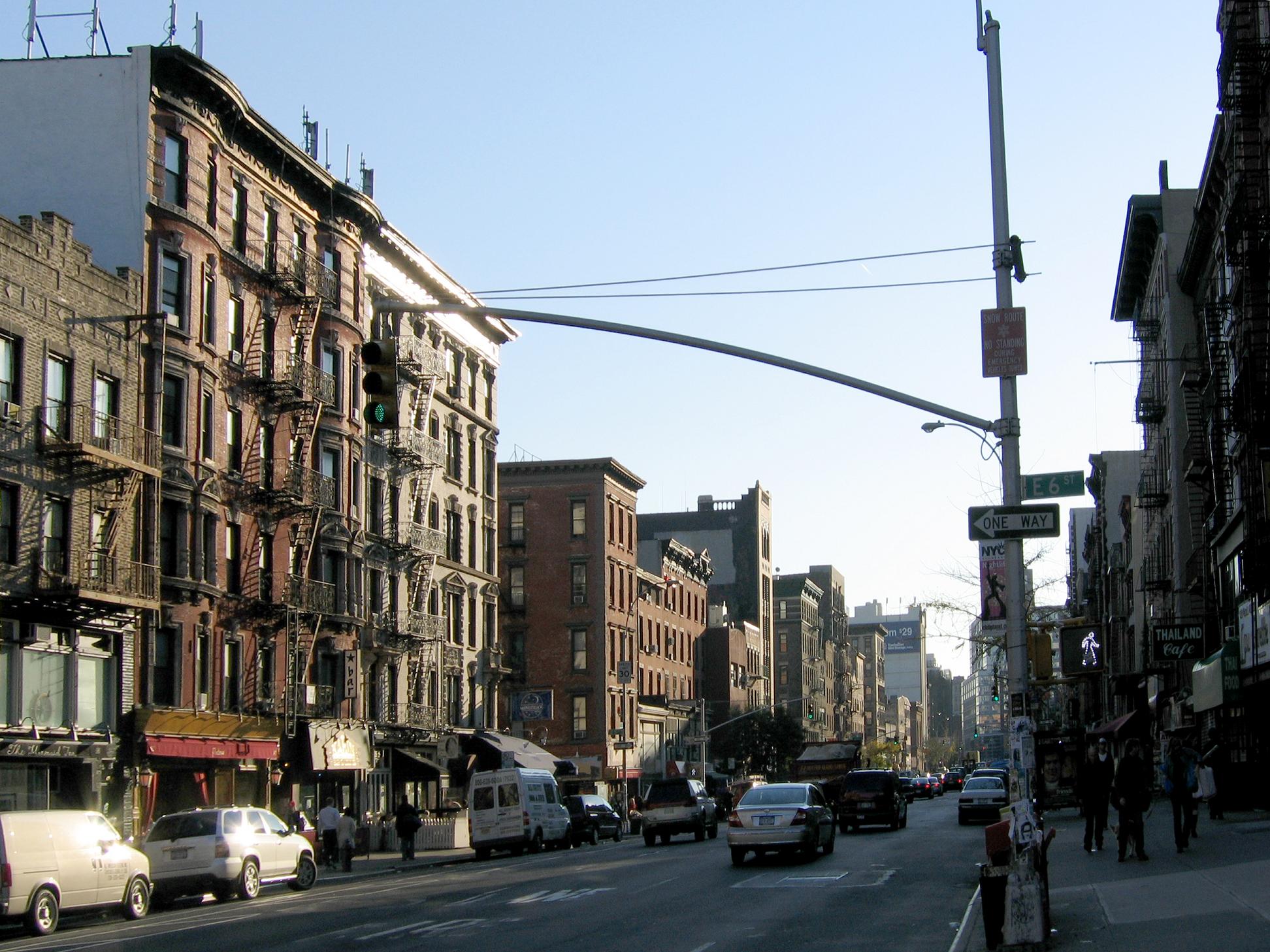
To believe in the promise of this city, or any city, is to believe that—for all the churlish churn on the streets, the neighborhoods turning over and upside down, the way that it throws off and throws out people—there are still some apartments yet unvisited, and that those apartments might have people like Chloe in them. It's to believe that there are still doors that could be opened to reveal people as wise and generous as she, people whose sweet vastness can prise you open, head and heart. It's to believe that there are people who can and will pour great goodness through you and leave something behind even as their wild, laughing love beams from you in every direction at their happy behest, their bright beauty bounding down Second Avenue in the twilight and then out, everywhere.

Wednesday, September 11, 2013

Hey Wow

I'm obviously not writing any of these posts about finding lawyers. That's obvious, right?

Monday, February 4, 2013

The (Super Bowl) Week That Was

So. Hello. I'm going to start trying to round up all the writing I do over the course of the week and put it in a post. Some of this is for my personal accounting, so that I can have both a sense and a record of how ridiculously many words I'm writing per week. The rest of it is a belated attempt to bring this site back to its original non-dog-video purpose, which was for me to put the stuff I write. As that column on the right is already both overloaded and outdated, I figured maybe this is the best way. Anyway, we'll see if I can keep it up. But yeah, here is what I did on Super Bowl Week. (The picture of Rickie Weeks is because his last name is Weeks.)

I wrote about Alex Rodriguez, sad robot and totally opaque human being, for Sports On Earth. The commenters there, as is their wont, didn't like it. I was too hard on A-Rod, or defended him too much; I "obviously don't watch baseball." So all in all a success. Anyway, I liked it:

To live in that moment of command -- and yes, even A-Rod makes an out more often than he doesn't, but the game is incalculably easier for him than it is for most humans who have ever lived -- must be strange, like a dream of flying that somehow never ends. It seems reasonable to assume that this would do some things to a person's sense of self. In a way, the things we revile about A-Rod -- his prickly superiority and relentless rule-flouting, and the presumption of personal impunity from which those behaviors spring -- all have their basis in a sort of fact. He actually is superior in the ways that matter most at his workplace, and he has effectively bent or broken rules without consequence; we may not like the way that he presumes he can lie or cheat or gamble or otherwise act like A-Rod, but his entire career stands as proof that his arrogant presumption of impunity is not exactly false.

I also wrote about Breitbart Sports, the new and familiarly bilious vertical at the late conservative media mogul's website for raging right-wing mutants, at Vice:

The genius of Breitbart was that he greeted the acolytes in his comment sections as revolutionary brothers at the bottom of those low and fatuous trenches he dug; he encouraged them to get to know each other, loosen up, and maybe scream at each other about how there should be a White History Month. Breitbart didn’t discriminate on ideology in this respect; he helped create the Huffington Post, too. Breitbart was in the echo chamber business. His job was creating spaces where people could agree with each other stridently and mostly wrongly about various easy outrages, safely out of earshot of those who disagree. It’s only fitting that after a career spent treating politics like a long football game between Black Nazi Communists and the Founding Fathers, Breitbart has posthumously lent his name to a sports-news website.
... and about how a Mardi Gras float featuring a giant, awful-looking vulva consuming NFL commissioner Roger Goodell is more than just a terrifying thing that really exists, for The Classical:

This still seems something like the right float at the right time, and not only because, as Guidry says, "If you ask just about anyone on the streets of New Orleans, 'Would you like to watch the demise of Roger Goodell by a giant man-eating vagina?' Their answers would be 'yes.'" There is that, of course, but there's also everything else.

Among the not technically columnar writings were two Daily Fixes (Monday and Thursday) for the Wall Street Journal, one amusing enough but typically erroneous prediction column in the form of a discussion between me and co-Fixer (and fellow supershitty prognosticator) Jeremy Gordon, and a goofy little thing for Joshua David Stein on proper Super Bowl Party Etiquette to which he added rather more French and wine-friendliness than was in the original, and improved somewhat in that way. Also I wrote about Chris Culliver, no-homo nickelback of the San Francisco 49ers, and his 750,000 fake Twitter followers, for The Classical. I wrote some other stuff that isn't published yet, but I'm going to limit this to bylines-of-the-week. The total is eight. The word count for all those is depressingly large, the amount invoiced poignantly small. You might as well just infer that part going forward.

Tuesday, December 25, 2012

Nothing Ends/Happy Holidays

This morning, for the first time in my life, I came down the stairs to find a large, lavishly decorated Christmas tree with carefully wrapped gifts arrayed around it. This wasn't totally surprising -- the tree was there when I went to bed, and I did not awake suddenly at my apartment in New York to find stairs and a second, more rustic story below. I am at my in-laws in Maine, they decorated the tree, the staircase was theirs and so on. It was snowing outside, big fat festive flakes.

The Classical is resting, but there's still work to be done, because there's always work to be done, but I felt a sort of comfort and relief I haven't felt all that often of late. Not just because of the usual stress and strain, although there's that -- I finished this week's column for Sports On Earth, on Kobe Bryant's vampirically batshit and typically fascinating team-hijack in Los Angeles, at the Portland Jetport Monday afternoon. Mostly because these are deeply uneasy times, even by the usual standards for this. Maria Bustillos and I talked about this at The Awl, with regard to the wonderful and way out-of-print dystopian Catholico-baseball apocalypse novel The Last Western.


Maria: So do you think the world is going to end, David? 
David: I'm of two minds on the apocalypse. 
David: (I just wanted to type that.) I certainly have a difficult time, looking at the things that are wrong and the responses they're engendering, feeling too optimistic about solutions. The abstraction and the deep and dimly understood grievances and the distance, all these different types of retreat: those are a bummer both because they give us a shitty discourse and stupid art, but also because problems as big as ours require non-individuated solutions, and a basic recognition that other people are as important as we are, and that we all ought to be thinking about each other a bit more. And working on that. Current events and all. 
David: But on the other hand: we're still here. People can be great. And the alternative to not fixing things is not tenable. The status quo is not tenable. People seem to be realizing this. 
David: It's difficult not to. I just can't see how that translates, or what it translates into. 
Maria: Well, here we are, agreeing about that, so there is a chance; where two or twenty or two thousand can agree, so can multitudes. Sometimes I fancy I can almost feel the change coming. I do not believe the world will end anytime soon, in part because it's been ending my whole life. There are always surprises, fair and foul. Things are dire, certainly, but I have what I am going to have to call faith.


Maria is smarter than me, and most anyone else. It can be difficult to have faith. I have difficulty with it myself. But it is nice to wake up someplace safe, with nothing to do, surrounded by people you like. It's restorative, and I hope you're there, too, today and tomorrow and for as long as you can be. Take care of yourself.

Friday, December 14, 2012

Bigger and Bigger, You and Me

You don't need me to lifehack this shit for you, presumably, but here is a thing to do on one of those days when some robustly armed narcissistic mutant turns peak military kill-technology on a crowd of innocents: stay the hell off of social media. This isn't the worst advice most days, and should be even more so on days like today that are so much worse than most. Today a 20-year-old in Connecticut killed his mother, took her car and her .223 assault rifle, drove to an elementary school, and killed 18 children and a handful of teachers, a principal and a school psychologist, then killed himself. This is not even the first time this week that something like this has happened, as a similarly well-armed kid killed two and shot others at a mall in Oregon, then killed himself. That was four days ago. Everyone caught something of a bleak break in that case, as the shooter's gun jammed and as police had trained for just such a scenario and responded quickly.

That this is the sort of thing police must train for is sobering enough. That it keeps happening is sobering enough. That every time it happens it is followed by queasy condolences and teary commemorations and nothing at all else is the worst. Well, it's not the worst. The worst is individuated, unimaginable, crushing, and it's happening in Connecticut today and Oregon earlier this week and Colorado before that and Arizona before that, and there is nothing much to say about it except that it is terrible. That is one kind of horror, and that it is not ours in particular is occasion to feel whatever we may feel about that. A guilty blessedness or big-hearted anger or nothing much in particular.

But that is what one person feels. It's relevant and revealing as far as that goes, but only that far. The fact that this keeps happening, and happening everywhere -- in gun-saturated states like Arizona and gun-averse ones like Connecticut and everyplace in between -- suggests that this is not a one-person issue. This is a problem for all of us, everywhere. And what spending time on social media in the wake of something like this reveals, the killing thing, is how profoundly difficult it is to think of these shared things in that way.

What you get, on Twitter -- in this case and, in general -- is the one-person bit. One side abstracts the other unto/into parody: kooks and communists, gun-nuts and libtards, grenades into opposite trenches forever. Crack that nightmare ceiling and we're still there: the robust defense of abstractions, one way or the other -- rights or non-rights, bickered and dickered over until muscle failure -- and various huffy responses to other huffy responses. A cycle of individuated offense, impregnable, forever and ever. There are ghouls with spammy Twitter feeds looking to leverage it; there are the inspirational fake-celebrity feeds popping off ponderously on it, an army of Not Really Will Smiths getting serious about a really real thing; there is some two-fisted foof from Esquire bringing the fatuous Writerly Imagery that no one needs at this moment; peevish strident certitude on peevish strident certitude. All of them on their own turf, tooth and nail after their abstractions of choice. Little arguments to distract from the big ones, everyone great and small letting their personal trolls out. 


Yeah, that never got answered. It's not about answers, really. It's about assertions, and it's about on to the next one. Points and points and points, fresh takes and bold stands all the way into this endless living oblivion; this violence and these deaths as a fact of life, everyone getting very sad when the situation demands, which is often enough that you'd remark upon it. Nothing changing, or even really coming terribly close to changing. All these values that can't or won't reconcile with others, and the colossal waste of real human lives as the collateral damage from all that righteous abstraction.

As it happens, I've filed a .223 rifle. I wrote about it a little bit last year, in something I wrote about the tenth anniversary of September 12, 2001. It's a terrifying and weirdly exhilarating experience; it's quite a machine, and it kicks out the endorphins whether you want it to or not. I believe that there's no reason why a non-infantryman should ever hold one of these weapons; a lot of Americans are broadly cool with that, and with making the ownership of such a weapon somewhat harder. 

I don't trust President Obama, who did seem legitimately moved -- and maybe legitimately chastened by what a decade of tactical neglect on this issue has given us all -- to do much beyond responding to this, as he put it, as a father. As a father, he is doubtless painfully aware of the stakes today. But if he wanted to react to this as a President and as a politician, he would have to negotiate with people whose sole selling point to their constituencies is their supreme intransigence. To have that discussion, and win it, Obama would have to set out to sell something that people may not want to buy; he would need to ride for a value beyond mature and equitable process, which seems to be the value he relates to most innately. He might lose. That last bit has, for the most part, been enough to keep him out of similar fights in the past.

This is a failing on his part, or would be. But the greater failing is ours, and it's there on Twitter and Facebook and anywhere else online where we can declaim into ether. Guns kill people. People kill people. Our desperate false certainties and righteous umbrage and personalized pieties, our dedication to not talking about what is: all of these things are killing us. There is indisputably a problem, and we can either solve it or we can't.

But we -- not a nation of lone strapped-up heroes defending shrinking homesteads, standing our ground and wild of eye and scared as shit, but a nation fully and full-stop -- will have to be the ones to solve it. It's not about me or you or our various offended values or deeply held personal beliefs or feelings or metaphors on the issues of the moment, although of course good luck with all those. It's about us, kids and grown-ups, armed and un-armed, all of us together and working to prevent the devastation to come, or it's all of us lost in it, hunted by what we are too vain or blinkered or scared to face. It's as big as all of us, no smaller. It can be figured out, but not if we can't talk about it.

Monday, December 10, 2012

A Curious Bird

Sports columnists are about the easiest characters in all of media to goof on. ESPN, which does them the great disservice of putting them on television and encouraging them to shout things they may or may not actually believe, deserves much of the credit for that, but columnists have done their part, too. Lord knows I will indulge in some columnist-goofing, and will almost certainly continue to do so as long as your Woody Paige and Bill Plaschke types are drawing breath/paychecks for bombastically writing things they haven't thought about on topics they don't care about, or don't believe are true but do believe will agitate people, and/or all of the above. It won't have any impact on them, or on anything else, but it's easy and gratifying and seems like the right thing to do. I've got my own column inches to fill, after all.

I'd like to say that I have some more appreciation for the columnists I joke about since becoming a columnist myself; I'm now doing two columns per week, one for Vice and one for Sports On Earth (which doesn't have an author page for me yet; I wrote this and this and this and this and this for them). I enjoy it as an exercise and a job, although it's clearly easier some weeks than others. Last week, for instance, was not an especially news-y one, and the absence of actual incident made it difficult to have a take -- HOT, LOUD AND FIRST on some Skip Bayless shit, or really even at all -- worthy of a column. It's on those sorts of weeks that I understand, and come as close as I come to appreciating, how difficult and unpleasant it can be to be a columnist, and to have been a columnist for a long time, as the worst columnists typically have been.

The job doesn't change from week to week. The job is to discuss a thing that everyone is already discussing, whether you want to or not, in a way that will stand out for one reason or other from the dense discussion that's already happening; the deadlines are non-negotiable, the outlines are non-negotiable, and the fact that there are only so many things to say about the SEC's dominance of college football or LeBron or whatever doesn't matter at all, really. Do this for a few decades, and it's easy to see how a person could become as curdled and distant and broadly bummed/bummer-inducing as many columnists have. I don't know that I can imagine doing this for decades, although thinking in terms of decades makes me dizzy anyway. I'd like to think that I'd either stop if I didn't like what I was writing about anymore, or that I'd find some enduring meaning in it somehow. But who would want to think about the alternative? (There are, thankfully, some examples of people who love sports enough to keep it fun for the rest of us; see what I wrote about Bill Raftery and Bob Ryan at The Classical, for instance)

So last week, with nothing much to write about, I wrote for Vice about the New Orleans Hornets maybe changing their name to the New Orleans Pelicans. It had a lot of jokes in it, many of them centered around the team name of the Utah Jazz, and one of which was brought to glorious life by the internet mega-hero Sorry Your Heinous above. I was not necessarily relishing writing a column during a week that didn't quite offer anything column-worthy, but I wound up liking the piece a lot; it's one of my favorites to run at Vice in some time, actually.

Writing columns isn't as difficult or unpleasant as it can be made to look; it's not really all that easy, either. But for all the grousing I do about this work and the things that are wrong with it, I keep coming back to a sort of tired-out gratitude. The Classical is a year old, and as punishing and demanding and wonderful as any one-year-old could be; I'm very proud of it, and cautiously but hugely hopeful of what it could become. Writing columns about sports can be a pain in the ass, but is also finally more or less paying my bills, and is something I like doing. I can complain. I can always complain. But lord knows I've had worse jobs.

Sunday, November 11, 2012

It's Real Out Here

I just never do this anymore, I guess. This is easy enough to explain, as I'm writing as hard and as fast as I can all the time, but also impossible to guess from the site I made explicitly to put all that writing in one place, and which I haven't updated since Week 15 of the 2010 NFL season. If you were reading this site as your sole source of football news, you'd have no idea that the Cincinnati Bengals did indeed win the Super Bowl last season in what's still known, even all this time later, as The Bernard Scott Game. That would be terrible for you, not to know that. I'd be so sorry if that were the case.

Anyway, I haven't written here not because I don't like it -- I do, I like writing and I like writing about myself -- but because I've been writing and editing too much elsewhere to do much else. The editing is all for The Classical, which continues to be the cause and solution of all my disillusionment about writing words on the internet; our NBA preview, which is not really a preview at all now that the league is back and once again being bent to the iron wills of Kyle Lowry and Andrei Kirilenko, is called Why We Watch, and it takes up a lot of my time, and I love it and am proud of it. In recent weeks, I've done some meme-ing and some actual writing there, too, although the balance of my time has been devoted to learning on the fly how not to edit like a total bigfooted, ham-fisted doof.

The other writing is in the usual places, and not at some of the old usual places; I haven't written for The Awl in too long, which bums me out because I love that site and the people who edit and read it, but is easy enough to understand in that I've been trying to get paid for my writing, and that the current rates I get for my writing require me to do it as much as possible so that all the $75 and $150 and $250 paydays add up to the right amount at the end of the month. I've been able to do that, to a decent extent, at GQ and GQ.com and Sports on Earth and The Daily Beast, among other places, of late. I wrote two things for New York Magazine that were fun, one of them about longtime hero-antagonist Guy Fieri as a literary figure, and one about a thing I actually love, which is tomatoes from New Jersey. There's always the Wall Street Journal and there have been some highlights at Vice, which continues to let me do writing I care about, like this and this and this. This bit, which I wrote for the excellent Capital New York site about Bruce Springsteen and Chris Christie, is one of my favorites. I've been busy, which is good because the alternative is being stressed out and not being able to pay rent, whereas the present is more about being stressed and being able to pay rent.

You might have noticed the constant, above. Which is, I suppose, the freelancer's lot, especially when the weekly bedrock gigs pay as little as mine do; the rest of it, the stuff that makes things like going out to dinner on occasion and being able to pay for cable possible, is all on me to find, pitch and write. That's exhausting and often disheartening, it shrinks each week down to a sum of billed work at its end, and it does do a lot to take the fun out of this thing I love so well. It makes it difficult for me to write for free, for instance, or even to do the basic professional maintenance that'd be wise to do here, because I am already writing as many words as I can each week, so that I will make enough money to live. But it is also exactly what it is, which is something I knew about, and the state of the industry, and the state of a lot of industries and as such something probably best addressed in a bigger context than My Anxious Life, at a blog with my name in the URL.

So, it's all good, mostly. I'm still up against it financially more often than I'd like, and there are a lot of things I'd like to write or do that I just can't, for various stubborn and stubbornly tangible reasons. But I'm writing stuff I care about, and some of it is good, and all of it is better than the alternative. You've no doubt learned, over these months of me not doing much of anything here, either to look for my writing on your own, or look elsewhere for your meat similes and free-associative politi-sportswriting. I'm still here, though. I'm working a lot. But I'm still here, and I appreciate you being here, too. None of this would make even the modicum of sense it does if I didn't think you -- or somebody -- might want to read it.